
The First 100 Days After Buying a Business: Change Less, Learn More
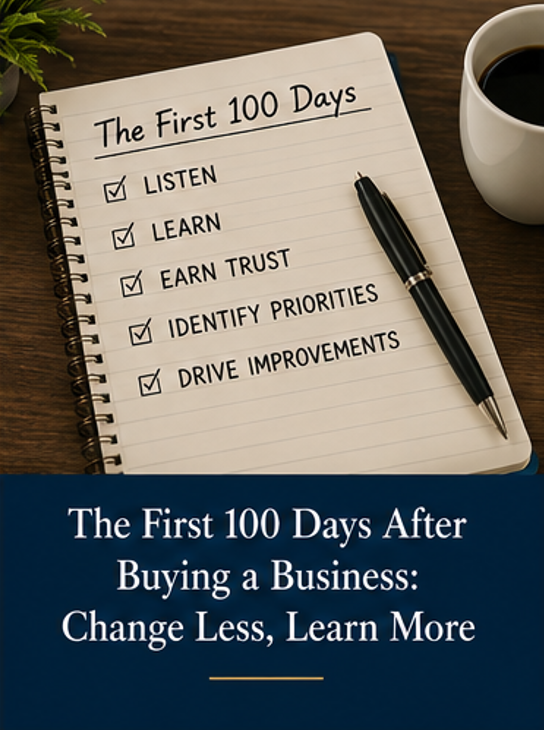
ApproachInvestment CriteriaTeamPerspectivesContact Acquiring a business creates an understandable temptation to act. New owners have ideas, financial models, improvement plans, and a list of opportunities identified during diligence. Closing day can feel like the starting gun. Often, the better first move is to listen. A successful company has developed systems, habits, relationships, and informal practices […]
Selling Your Business Without Losing What You Built

ApproachInvestment CriteriaTeamPerspectivesContact Selling Your Business Without Losing What You Built For many entrepreneurs, selling a business is described almost entirely in financial terms: valuation, purchase price, taxes, and proceeds. Those issues are important, but they rarely capture everything an owner is actually giving up. A privately held company may represent thirty years of work. […]
What Makes a Business Worth Owning for the Next 20 Years?
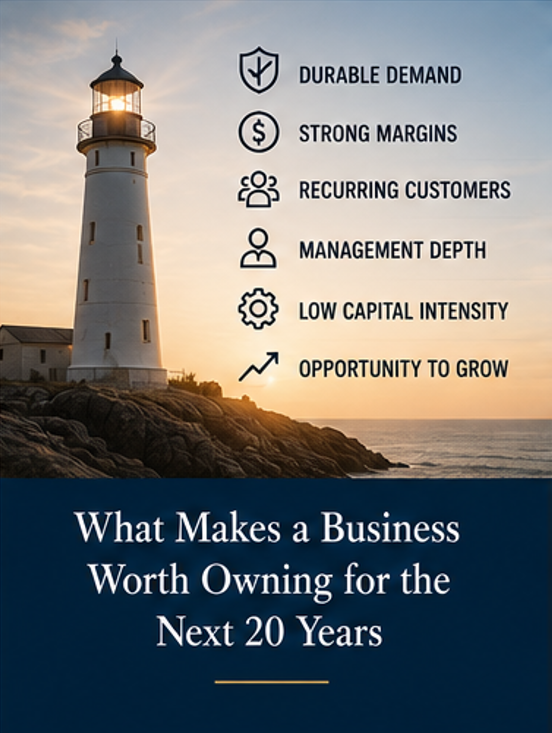
ApproachInvestment CriteriaTeamPerspectivesContact A business can be profitable today without necessarily being attractive to own for the next twenty years. Long-term ownership requires looking beyond current earnings and asking a more fundamental question: why should this company continue to matter? Durable demand is a good starting point. Businesses serving essential or recurring needs tend to […]
AI Isn’t Just for Tech Companies: How Small and Middle-Market Businesses Can Put It to Work

ApproachInvestment CriteriaTeamPerspectivesContact Artificial intelligence is often discussed as if its primary users are technology companies. In reality, some of the most practical opportunities may exist inside traditional businesses where employees still spend significant time performing repetitive administrative and information-processing tasks. The question for business owners is not whether they need an “AI strategy.” It […]
How to Make a Good Business Better
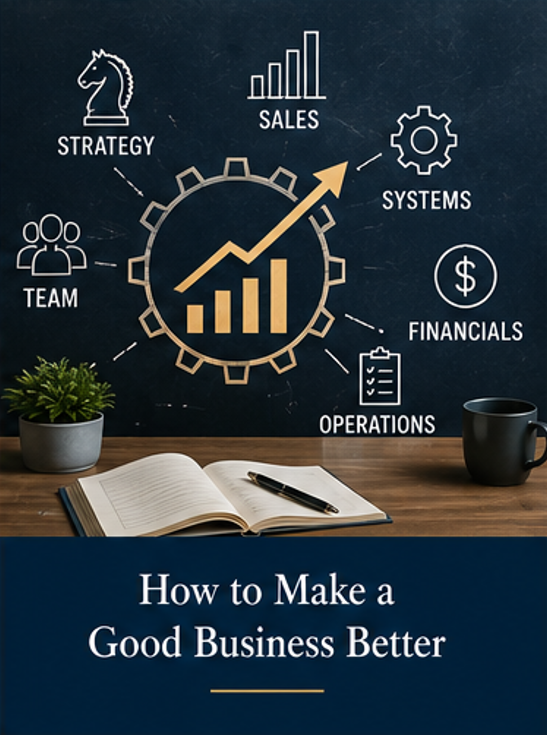
ApproachInvestment CriteriaTeamPerspectivesContact The best businesses to acquire are rarely broken businesses. They are good companies with loyal customers, capable employees, strong reputations, and operating models that have worked for years. The opportunity is not necessarily to reinvent them. It is to make them incrementally better. That distinction matters. New owners can destroy value by […]
The Great Ownership Transition: What Happens as Baby Boomers Retire?

ApproachInvestment CriteriaTeamPerspectivesContact The United States is entering one of the largest ownership transitions in its history. Thousands of privately held businesses were built or expanded by entrepreneurs who are now approaching retirement age, and many of those companies do not have an obvious successor. This is sometimes described as a demographic event, but […]
When the Next Generation Doesn’t Want the Business

ApproachInvestment CriteriaTeamPerspectivesContact When the next generation doesn’t want the business For generations, the default succession plan for many family-owned businesses was simple: the company would eventually pass from parent to child. Today, that assumption is increasingly unreliable. Children may have built careers elsewhere, live in another city, have different interests, or simply not want […]
Who Buys a Business, and Why the Buyer Matters

ApproachInvestment CriteriaTeamPerspectivesContact For many business owners, the universe of potential buyers can seem surprisingly opaque. A buyer may describe itself as a private equity firm, family office, independent sponsor, search fund, strategic acquirer, or simply an investment group. Those labels matter because different buyers can have very different objectives after a transaction closes. A […]